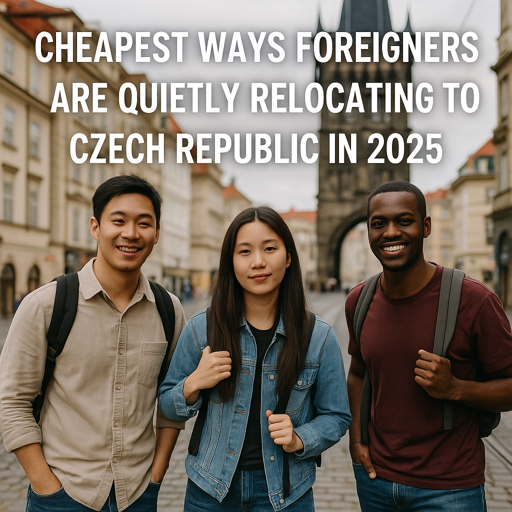

Let’s be honest for a sec! moving to a new country sounds thrilling until you look at your bank account and suddenly feel like backpacking through Europe just became couch-surfing through your own living room. But you know what? People are quietly packing up and relocating to the Czech Republic in 2025 and they’re not all crypto bros or diplomats. They’re students, digital nomads, remote workers, young couples, even retirees… and they’re doing it on the cheap.
So, how are they pulling it off without hemorrhaging money? Let me explain.
Why the Czech Republic?
Sure, the Czech Republic especially Prague has that whole fairy tale vibe with cobbled streets, dramatic spires, and enough charm to fill ten Instagram feeds. But beyond the postcard views, there’s real substance.
For one, the cost of living is significantly lower than most Western European countries. A two-bedroom flat in Brno? Around €600. A monthly public transport pass? About €20. A pint of world-class beer? A ridiculous €1.50. And let’s not even get into how efficiently things just work here healthcare, transport, safety it’s all very… non-chaotic.
Add to that the fact that the Czech Republic sits smack in the heart of Europe, and you’ve got weekend trips to Vienna, Berlin, or Budapest on the table without dropping half your paycheck.
But the real kicker? The immigration pathways are surprisingly doable if you know the backroads.
The “Student Route” – Not Just for Teenagers
No, you don’t have to be 19 and full of existential dread to get a student visa. In fact, many foreigners in their late 20s and 30s are enrolling in language schools or short-term university programs just to get that sweet long-term visa.
Here’s how it works:
- Enroll in a Czech language course (many are under €3,000 per year).
- Use your enrollment to apply for a long-term visa for the purpose of study.
- The visa allows you to stay legally and even work part-time.
It’s kind of like a legal loophole that lets you slowly transition into Czech life without jumping straight into job-hunting stress. And honestly? Learning the language makes everything easier bureaucracy, friendships, dating, ordering coffee without miming.
Remote Workers & Freelancers – The “Zivno” Setup
Ever heard of the Živnostenský list? It’s a freelancer’s best friend in the Czech Republic. Basically, it’s a trade license that allows non-EU citizens to live and work here as self-employed professionals.
Now, this isn’t your average plug-and-play visa. There are hoops paperwork, tax ID registration, proof of accommodation but it’s very doable, especially with local consultants (some charge around €400 to handle the entire thing). Once approved, you’re in the system, paying taxes like a good citizen and enjoying public healthcare.
It’s a golden option for:
- Writers, designers, developers
- Online teachers and coaches
- Creators earning online income
And the cost? Compared to U.S. health insurance premiums or London rent? Laughably low.
The Marriage or Partnership Path
Let’s tread carefully here it’s not about fake marriages or green-card style arrangements. But it’s true that many expats who build relationships with Czech citizens or EU residents find their path to residency smoothed significantly.
Partnership registration and family reunification visas are absolutely valid and legal pathways. The process can be a bit of a paperwork monster (and Czech bureaucracy loves paperwork), but the rewards legal stay, access to local benefits, actual peace of mind are worth it.
Long-Term Tourism With a Twist
You didn’t hear it from me, but a decent number of foreigners are stringing together Schengen stays (90 days) with stints in neighboring non-Schengen countries like Serbia, Georgia, or even the UK.
It’s the digital-nomad version of slow travel. Spend three months soaking up Prague’s jazz bars and Vltava views, then hop over to Belgrade for a visa reset.
Now, is it sustainable long-term? Not really. But as a temporary lifestyle hack while figuring out something more stable like the zivno or student route? Absolutely.
Where They’re Living
Sure, Prague is iconic but it’s also where prices creep up fastest. That’s why savvy movers are skipping the capital and heading to:
Brno – A tech hub with a more laid-back vibe and lower rents
Olomouc – A hidden gem for history lovers and students
Pilsen – Home of the original Pilsner beer (need we say more?)
České Budějovice – Small-town charm, easy living
These places have solid infrastructure, less expat saturation (read: more authentic local experiences), and significantly cheaper rents.
A Few Honest Warnings (Because You Deserve the Truth)
Relocating is never just sunshine and savings. Czech bureaucracy can be… well, Kafka wasn’t exaggerating. You’ll need patience and probably a local to help translate forms that look like ancient legal scrolls.
And the winters? Let’s just say you’ll be rethinking your relationship with sunlight by January.
But but once you’ve settled in, found your corner café, and figured out how to say “no plastic bag, thanks” in Czech, something magical happens. Life slows down in the best way. Rent isn’t suffocating. Healthcare won’t bankrupt you. Your mornings aren’t eaten by commutes.
Final Thought
If you play your cards right, yes. It’s not “free,” but compared to moving to Paris or Berlin or Barcelona? The Czech Republic still feels like one of Europe’s last affordable secrets.